

Meta Builds a Humanoid With Shanghai's Fourier, Report Says

Meta has built a prototype humanoid robot together with Fourier, the Shanghai robotics company, and has started work on a second version, according to a report by The Information that Reuters carried. The account rests on people familiar with the project rather than on any disclosure by either company, and Reuters did not independently confirm it.
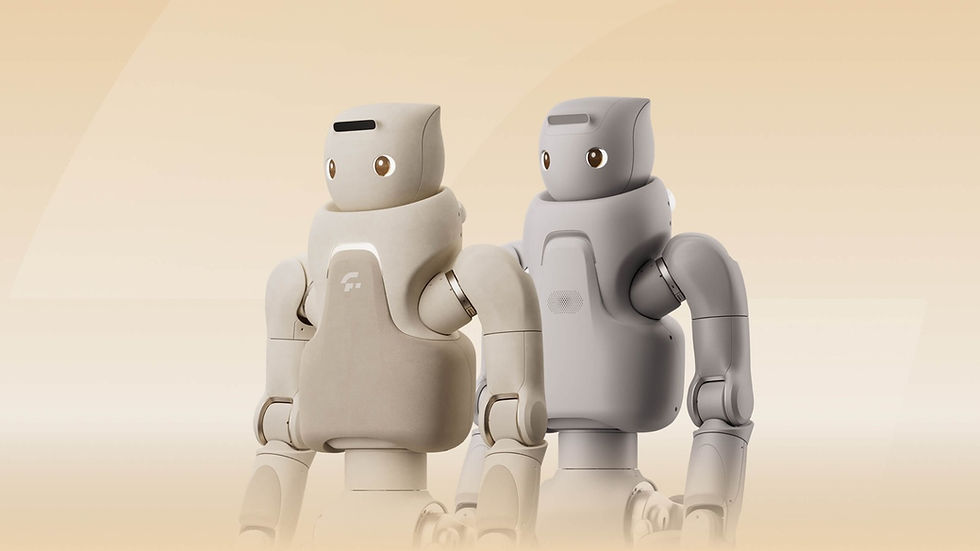
Fourier is not a name that appears in most Western coverage of the humanoid race, which has been dominated by Figure, Tesla, Agility and the Chinese firms Unitree and UBTech. It is, however, a company that already ships machines, and that is the part that makes the report plausible.
But the pairing only makes sense if you separate the two halves of a humanoid. Building a body that walks, balances and grips is a manufacturing problem with a long list of suppliers behind it, while making that body useful is a software problem, and the two skills rarely sit in one company.
Fourier's catalogue shows where its strength lies. It sells the GR-3 series of humanoids, the GRW wheeled dual arm robot built for collaboration with people, and RehabHub, a line of rehabilitation robotics used in clinical settings. That rehabilitation business came first, and it gave the company a route into actuators, sensing and clinical validation before the humanoid boom arrived.
And Meta's motive is easier to read. The company spends heavily on AI models and on mixed reality hardware, and it has no public humanoid programme of its own, so a working body gives its researchers something to test perception, planning and manipulation against without building a factory.
But the report does not settle the machine itself. There is no public specification, no indication of which Fourier model the prototype is based on, no cost, and no timeline for the second version. The Information's account is behind a paywall and Reuters carried it as a brief, which leaves the substance of the work unverified outside those familiar with it.
That gap matters because a research prototype and a product are different objects. A lab can tolerate a robot that needs a technician on hand, a tethered power supply and a controlled floor. A product cannot, and the distance between the two is where most humanoid programmes have stalled.
The commercial question is open. Neither company has said whether this is a research platform, a supplier relationship or the first step toward a Meta robot, and neither has commented publicly on the report. A prototype built with an established manufacturer usually means assembly rather than invention, with the partner supplying joints, actuators and a tested walking gait while the customer supplies compute and training.
And what would change the picture is a second version with published details. If Fourier is supplying the chassis while Meta writes the software, the next signal would be a specification, a named partner or a factory commitment, and any of those would tell you whether this is an experiment or a programme. Until then the report sits where most humanoid reporting sits, with a credible account of work in progress and no artefact the public can inspect.
Reuters reported that Meta built a prototype humanoid with Shanghai's Fourier and is working on a second version
The report came from The Information, citing people familiar with the project, and was not independently confirmed
Fourier sells the GR-3 humanoid, the GRW wheeled dual arm robot and RehabHub rehabilitation robotics
No specification, cost or timeline for the robot has been published
Neither company has commented publicly on the report


