
The Trillion-Dollar Business of Being 'Flawsome'

In the world of modern marketing, the pursuit of perfection is increasingly becoming a fool's errand. We have entered a post-perfection era where the high-gloss, heavily airbrushed advertisements of the past are being pushed aside by something far more relatable. This movement is defined by a concept known as being 'flawsome'. The word 'flawsome' is a combination of flaws and awesome and was originally coined by model, television personality, and businesswoman Tyra Banks. She created the term to describe something or someone that is empowered and beautiful because of their imperfections. In a commercial context, this idea has become a cornerstone of authenticity. Brands are finding that they are actually more attractive to consumers when they embrace their rough edges and unfiltered moments.

The shift is far from just a passing trend in social media aesthetics. According to the white paper titled The Art and Science of Authenticity, which was developed by TikTok in collaboration with Accenture, the creator economy in the Asia Pacific region alone is projected to reach a staggering 1.2 trillion US dollars in commercial value by 2030. This represents a 1.4 times growth from 2025. The data reveals that consumers are increasingly fatigued by high-gloss content. In fact, three in four consumers will now skip content that feels too polished or inauthentic, which is five times more than those who skip content simply because it is an advertisement. Audiences now favour a lo-fi aesthetic that fits the platform vibe, prioritising what feels real over what looks expensive.
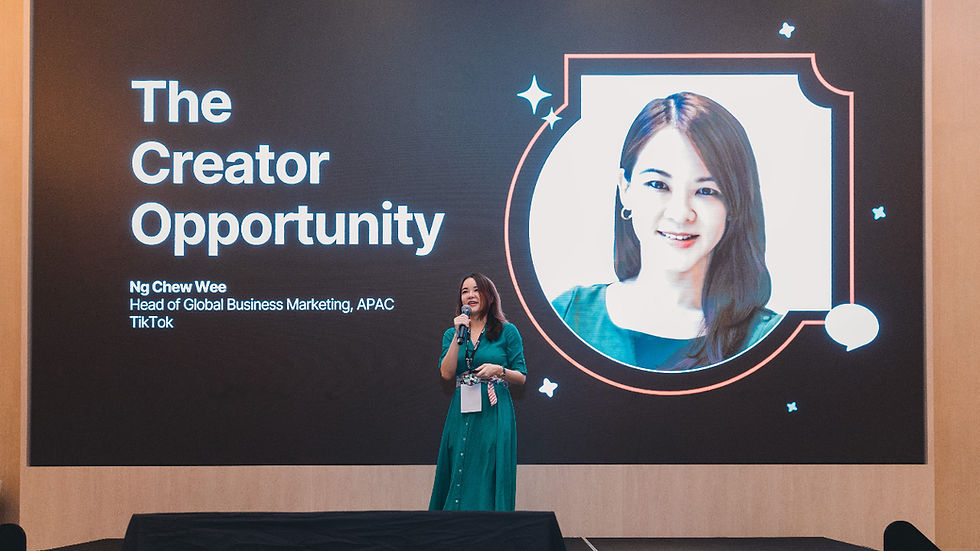
Harnessing this trend requires a deeper understanding of the science behind the art. Ng Chew Wee, the Head of Business Marketing at TikTok APAC, suggests that the democratisation of creativity is at the heart of this movement. Chew Wee says "We believe all along in democratising creativity. We believe that anyone can be a creative creator". She notes that the barrier to entry for making impactful content has vanished. Chew Wee says "You do not need a big studio or a design degree or a big budget in order to be able to create content and express yourself". This philosophy is what allows the 'flawsome' approach to thrive at Tiktok. Instead of spending big marketing dollars and months on a single television commercial, more brands are leaning into the weirdness and idiosyncrasies of the Tiktok community. As proven in the white paper, 9 in 10 consumers in the region are likely to be influenced by these authentic content to make a purchase, but that content must still provide tangible proof or emotive connection.
Before rushing into low-budget, lo-fi production, it is vital to be mindful that authenticity is not defined by a price tag, as high production value can coexist beautifully without compromising a brand's standards or identity. Premium brands can maintain their high standards while still feeling raw and genuine to their audience. Chew Wee says "when we say authentic, it doesn't mean bad content or cheap looking content". She shares an example of this balance through a campaign by Christian Dior featuring the global celebrity Cara Delevingne. During the filming of a perfume launch, Delevingne struggled with the pronunciation of the French product name. Rather than editing out these mistakes to create a perfect, sterile advertisement, Dior recognised that many consumers share this same struggle with French pronunciation.
They decided to use the behind the scenes footage of her mispronouncing the words as part of the actual campaign. They even boosted this content with paid media. By showing a global icon fumbling through her lines, the brand became more relatable without losing its premium status. Chew Wee says "The brand is willing to show a version of themselves. In this case, it is behind the scenes content that people might not normally have been exposed to". This willingness to be vulnerable is what defines the 'flawsome' approach for luxury brands. It shows that even at the highest levels of fashion and beauty, things do not always go according to plan, and that is perfectly okay. This type of content provides a sneak peak into the reality of the brand, which builds a level of trust that a perfectly rehearsed script simply cannot achieve.
The rise of Artificial Intelligence further complicates this narrative of authenticity. There is an inherent tension here because AI, in its rawest form, lacks the human flaws that define authenticity. It can produce perfect images and flawless writing - hallucination aside, which is the exact opposite of the 'flawsome' aesthetic that consumers are currently demanding. However, the solution is not to reject technology but to view it as a creative accelerator. Chew Wee says "Our approach to AI is that we still build human creativity at the center". She views AI as a collaborator that can handle the mundane tasks, allowing humans to focus on the storytelling and the soul of the content.
TikTok has introduced AI tools like Symphony and Creative Suite to help brands scale their content while keeping the human firmly in control. Chew Wee says " We give every creator, every brand, every businesses the right tools to be able to then imagine more, create faster, do more, while still keeping creators and the people and the brands firmly in control." For example, Unilever Indonesia sets up a photo booth for shoppers to test out their new vaseline product. In just 3 days, they captured over 3,000 videos, and by leveraging AI, they are able to quickly filter the footage down to the best 300 clips, and created a video for their final campaign. This approach allowed everyday people to become brand ambassadors through an AI process that still felt real because it featured real people. In the white paper, two out of three people are actually open to seeing brands use generative AI in their creative process, provided there is transparency and AI labelling.
The future of marketing requires a delicate balance. We are moving away from a one to many communication style and toward a many to many dialogue with the community. Success now depends on the ability to balance lo-fi and hi-fi content, and to find the sweet spot between AI efficiency and the human soul. While technology can provide the volume and velocity of content required to stay relevant, it cannot replicate the human vulnerability that forges a true emotional connection. Consequently, the need for human input is more critical now than ever before.
But this human input must be paired with a level of discernment. As a word of caution, aspiring creators must be careful not to mistake radical oversharing for genuine authenticity. There is a dangerous temptation to go in naked by airing your dirty laundry or revealing incriminating information just because other creators say you need to be real. In the digital world, a single lapse in judgment is often magnified a few hundred times and can lead to devastating consequences for your personal wellbeing and the lives of your loved ones.


