
China Leaps Toward Self-Driving With First L3 Approvals

China takes a major step towards widespread self-driving technology deployment by approving its first vehicles with Level 3 (L3) autonomous driving capability. L3 autonomous driving lets a car drive itself (steer, brake, accelerate) under specific conditions (like highway traffic jams or slow speeds) without driver input, allowing for "eyes-off" moments, but the human driver must remain alert and ready to take control immediately when the system requests a takeover, making them still responsible for accidents.
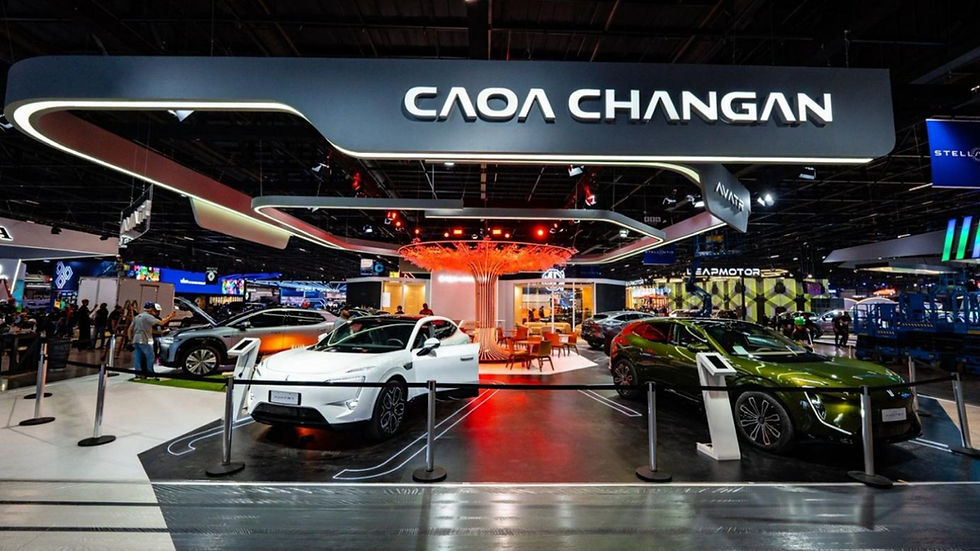
The Ministry of Industry and Information Technology MIIT announced this landmark decision, granting permission to Changan Automobile and BAIC to build electric vehicles EVs that will allow drivers to operate hands off under specific circumstances. This move signals a significant leap forward in the world’s largest automotive market. The approval is highly specific and limited, as the vehicles are pure EVs and can only navigate urban streets and highways within designated areas.
The MIIT confirmed that the two companies successfully passed the necessary safety reviews and tests for the two models. This development contrasts with most current driver-assistance systems used in intelligent cars, which are typically classified as L2 or L2+ and mandate that drivers keep their hands on the wheel at all times. Full autonomy, or L5, represents the stage where a vehicle requires zero human intervention under any circumstances.
The operational boundaries for the newly approved vehicles vary based on the manufacturer and the intended driving environment. The model to be constructed by Chongqing-based Changan, a major state-owned carmaker, will be capable of navigating congested urban roads. When its driver-assistance system is active, this model has a maximum speed of 50 kilometres per hour. In contrast, BAIC’s approved model, which falls under its Arcfox EV brand, is authorised to autonomously navigate highways or expressways, reaching a maximum speed of 80 kilometres per hour. Although the MIIT did not specify the date these two cars will hit the market, carmakers technically can begin assembling the models once they receive ministerial approval.
According to SCMP, experts suggest these approvals indicate the authorities' willingness to deregulate the market. Phate Zhang, founder of CnEVPost, noted that officials are likely pursuing a step-by-step strategy for distributing additional manufacturing licenses to other carmakers. The Chinese market is highly receptive to this technology. Over the past few years, sales of cars equipped with preliminary self-driving systems have surged, driven by Chinese consumers eager to embrace new technologies. A substantial portion of the market is already adopting advanced features. Zhang Yongwei of China EV100 says that two out of every three new cars sold on the mainland this year are expected to possess L2 autonomous driving capability or higher.
The industry has been preparing for the shift to L3 even before Beijing cleared the regulatory path. Top carmakers, especially those focusing on premium electric vehicles such as Huawei Technologies-backed Seres and Geely’s Zeekr, have already designed intelligent vehicles deemed semi-autonomous that would comply with L3 regulations. A crucial technology enabling L3 functionality is the lidar sensor, which uses laser beams to accurately measure distances to objects. Hesai Group, recognised as the world’s largest maker of these sensors, has stated its readiness to supply lidar and other necessary technologies for premium models featuring L3 self-driving capabilities. The advanced lidar sensors needed for L3 can cost between US$500 and US$1,000 per unit.
The MIIT plans to collaborate with other authorities to monitor these vehicles while promoting the development of smart driving industries in China.


